
A snapback closes with a plastic snap strip in the back and fits most adult heads with a handful of size clicks. A strapback swaps that plastic strip for a fabric or leather strap and a buckle, letting you dial in the fit down to the inch. If you want convenience and a bold streetwear look, grab the snapback. If you want a cleaner back profile and a more precise fit, go strapback.
TL;DR:
- Snapbacks feature a plastic snap strip with fixed adjustment clicks, making them faster and easier to adjust in any lighting or with gloves, but less customizable.
- Strapbacks offer continuous adjustment with a fabric or leather strap and buckle, providing a more precise fit and a lower profile, especially preferred in refined casual styles.
- Plastic snap strips can degrade over time with exposure to UV light and heat, whereas leather straps tend to age gracefully and develop a patina that enhances their look.
- The choice between snapback and strapback often reflects style signals: snapbacks are bold and streetwear-oriented, while strapbacks appear polished and suited for casual yet refined outfits.
- Matching the closure type to your wardrobe and intended use is more important than cost or perceived quality, with fit, durability, and style compatibility guiding the best choice.
Table of Contents
- Snapback vs Strapback: What You're Actually Looking At
- How Fit and Comfort Differ Between the Two
- Which Closure Holds Up Better Over Time?
- Matching the Closure to the Occasion
- Quick Pros and Cons Before You Decide
- How to Choose the Right Hat Before You Buy
- How Disrespectfulapparel Builds Its Flat-Bill Snapbacks
- What Most Buying Guides Get Backwards
- Grab a Flat-Bill Snapback and Wear Something With Attitude
- Sources
- FAQ
Snapback vs Strapback: What You're Actually Looking At
The fastest way to tell them apart is to flip the hat around and look at the back. A snapback shows a plastic tab lined with snap teeth, adjusting in visible clicks, usually seven of them, which adjust over a range that fits the majority of adult head sizes (https://www.sackett-ranch.com/blogs/the-frontier-journal/snapback-vs-fitted-vs-strapback-hat-closures-explained). A strapback shows a strap, either fabric or leather, running through a slider or buckle, which gives you continuous adjustment instead of fixed steps.
Crown height tends to follow the closure. Snapbacks lean toward structured, higher crowns and flat brims, the classic streetwear shape. Strapbacks skew lower and softer, closer to a relaxed dad hat silhouette, though plenty of exceptions exist on both sides.
- Snapback: visible plastic snap strip, usually structured crown, flat or slightly curved brim.
- Strapback: fabric or leather strap with buckle, often lower crown, sometimes curved brim.
- Trucker hats almost always pair a mesh back panel with a snapback closure, which is why they breathe better than a solid-back cap.
- Dad hats are usually strapback or a soft buckle closure, which reinforces that unstructured, worn-in look.
How Fit and Comfort Differ Between the Two
Adjustment style changes how the hat sits on your head, not just how you tighten it. A snapback moves in fixed increments, so you're picking the closest snap that fits rather than a perfect custom fit. That's fine for most people, since the standard range covers the vast majority of adult head sizes, but if you're between two snap settings, you'll notice it after a few hours.
A strapback lets you fine-tune tension continuously, which is why it tends to sit flatter and closer to the head. That flatter fit is part of why brands treat it as the more "finished" option.
- Snapback: quick on-off, adjusts in steps, slightly looser fit between sizes.
- Strapback: slower to adjust, especially with a metal buckle, but locks in a precise fit.
- Fitted caps skip a closure entirely, so they demand exact sizing and offer the cleanest silhouette but zero flexibility after purchase.
Pro Tip: If you're wearing gloves or adjusting in low light, a snapback is far faster. Strapback buckles, especially metal ones, are trickier to manage on the fly, and you'll usually want to tuck the loose strap tail so it doesn't flap around under the brim.
Which Closure Holds Up Better Over Time?
Materials age differently, and that matters more than most buyers expect. Plastic snap strips can yellow with UV exposure and eventually crack or lose their grip after repeated flexing. Fabric straps stretch out slowly with wear, and metal buckles or sliders can corrode if you sweat through them and never clean them off.
Leather straps are the exception. They tend to develop a patina that looks better with age instead of worse, which is one reason lifestyle and retail brands favor strapback closures for a more premium feel.
- Avoid leaving either style in direct heat or a hot car, since plastic warps and adhesive brims can separate.
- Wipe down the sweatband regularly. Salt buildup breaks down fabric and foam faster than sunlight does.
- Tuck the strap tail on a strapback when you're not wearing it, so it doesn't crease or fray.
Matching the Closure to the Occasion
Closure type sends a style signal before anyone even reads the graphic on the front panel. Here's how each one tends to read in different settings:
- Streetwear and everyday bold looks. The visible snap strip and structured crown give snapbacks a sharper, more graphic-forward look, which is a big reason they remain a streetwear staple.
- Promotional giveaways and events. Snapbacks are cheap to produce and cover most head sizes with one SKU, which is exactly why brands hand them out at trucker meets, festivals, and pop-ups.
- Boutique and refined casual outfits. A strapback's clean, low-profile back reads more polished, which is why smaller labels lean on the style for retail drops meant to look intentional rather than mass-produced.
- Anywhere a flat back matters. If you're pairing a hat with a slicked-back style or just don't want plastic hardware showing under a hood, the strapback wins by default.
Crown height and brim curve shift the effect further. A flat, high-crowned build reads aggressive and modern. A curved, low-crowned build reads relaxed and older-school, closer to a dad-hat vibe than a flat-bill statement piece.
Quick Pros and Cons Before You Decide
Neither closure is objectively better. They just solve different problems.
- Snapback pros: cheap to make, fits almost anyone, fast to adjust, bold visible hardware.
- Snapback cons: plastic can crack or yellow, fit isn't fully customizable, less premium feel.
- Strapback pros: precise fit, flatter back, ages well with leather straps, reads more refined.
- Strapback cons: slower to adjust, buckle corrosion risk, strap tail needs tucking to look neat.
If you value speed and a one-size-fits-most guarantee, go snapback. If you value a tailored fit and a cleaner silhouette, go strapback. There isn't a third right answer here, just a trade-off you're choosing on purpose.
How to Choose the Right Hat Before You Buy
A little homework before checkout saves you from returning a hat that looked right in a photo and felt wrong on your head.
- Measure your head circumference or check the brand's size chart against known model names. New Era's style guide and HatClub's style guide both map common model names like 59FIFTY and 9FORTY to specific crown profiles and closures, which helps you predict fit before you buy.
- Zoom in on product photos. Look closely at the closure, the crown shape, and the inside sweatband. A grainy back-of-hat photo is usually hiding something.
- Check the return policy and material specs. Snap plastic and strap leather both vary in quality, and a generous return window is a decent proxy for a brand that trusts its own construction.
Pro Tip: When in doubt between two snap sizes, size up. A slightly loose snapback is a five-second fix; a snapback that's too tight all day is not.
How Disrespectfulapparel Builds Its Flat-Bill Snapbacks
The brand sticks to the snapback closure across its flat-bill lineup, matching a focus on bold, graphic-first, streetwear-ready pieces that don't apologize for standing out. The Built Different, Assembled Poorly, Bad Decisions, Excellent Follow-Through, and Social Battery Sold Separately flat-bill hats all use that structured crown and flat brim silhouette snapback fans expect, paired with original tattoo and dark-humor artwork instead of stock graphics.
What Most Buying Guides Get Backwards
Most comparisons treat this like a battle between a "cheap" option and a "premium" one, and that framing misses the point. The real question isn't which closure costs less to manufacture. It's which one matches how you actually live in your hats.
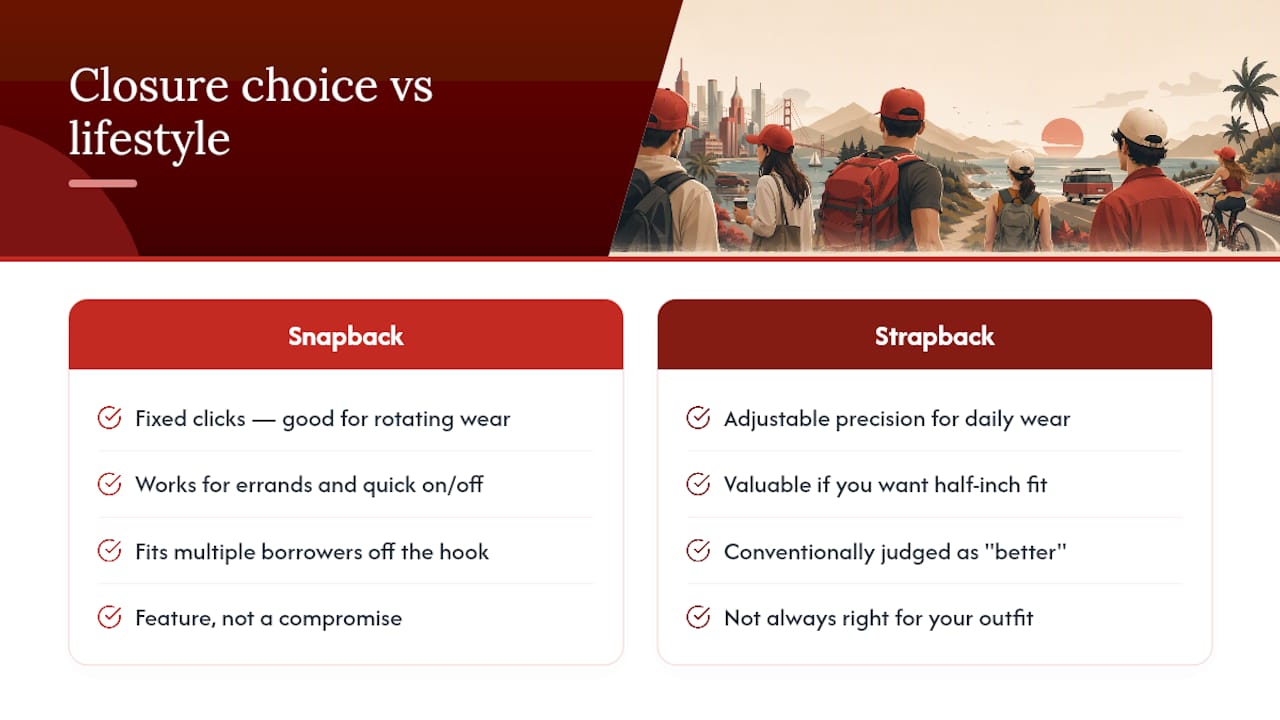
If you rotate caps often, throw them on for errands, or want one hat to fit whoever borrows it off your hook by the door, the snapback's fixed clicks are a feature, not a compromise. The conventional wisdom that strapbacks are automatically the "better" hat ignores that precision fit is only valuable if you're wearing the same hat daily and care about that half-inch of tightness.
Where I think buyers actually go wrong is judging a hat by its closure alone instead of its crown and brim. A high, structured flat-bill snapback and a soft, curved strapback dad hat aren't competing for the same outfit in the first place. Pick the silhouette that matches your wardrobe first, then let the closure follow from there. Aging and durability matter more over a year of wear than which adjustment mechanism felt fancier in the store.
— nicholas
Grab a Flat-Bill Snapback and Wear Something With Attitude
Disrespectfulapparel builds its flat-bill snapbacks the same way it builds everything else: original artwork, made-to-order, and zero interest in blending in. Every hat ships with standard U.S. shipping and skips clip-art shortcuts often used in novelty apparel.
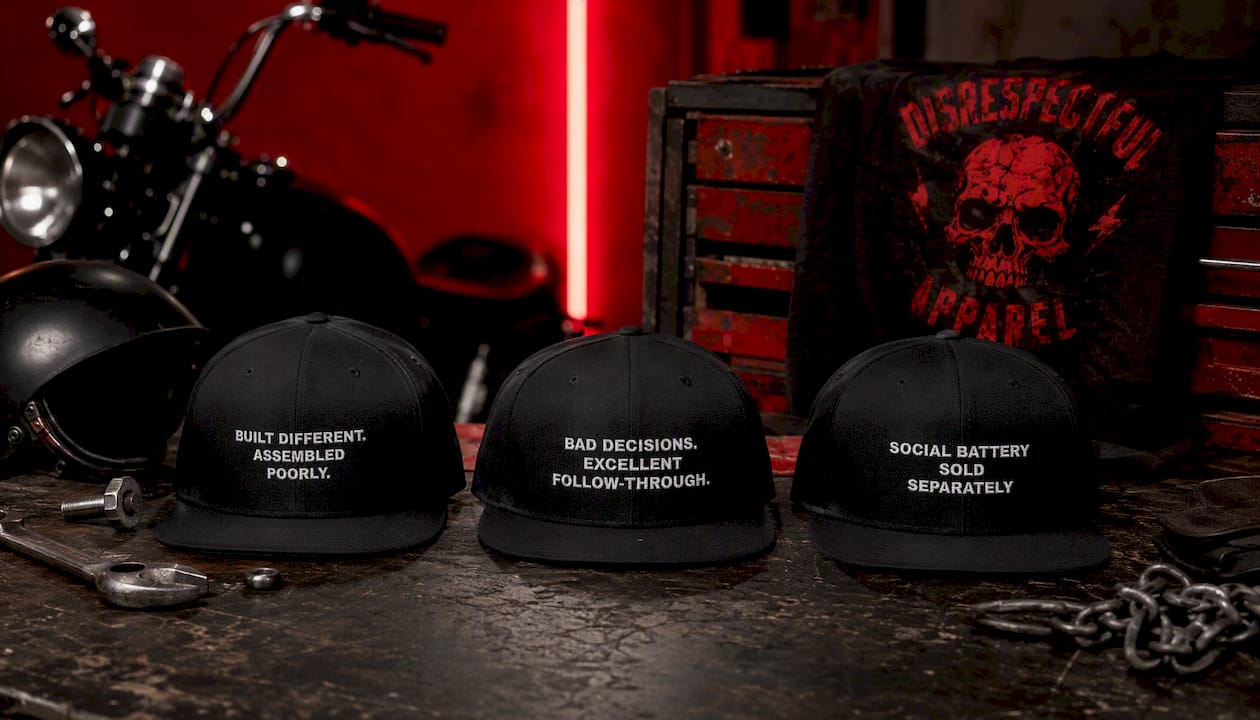
If the structured, high-crown streetwear look from this comparison is calling your name, check out Built Different, Assembled Poorly, Bad Decisions, Excellent Follow-Through, or Social Battery Sold Separately. Browse the full flat-bill hats collection to compare designs side by side, or pair a snapback with a back-print graphic hoodie for a complete outfit. Pick a design that actually sounds like you, add it to your cart, and let the made-to-order process do the rest.
Sources
- Snapback vs. Fitted vs. Strapback: Hat Closures Explained
- New Era style guide
- Hat closure types explained: Snapback, strapback, hook-and-loop, and flexfit
- HatClub style guide
FAQ
Are Snapbacks Still in Style in 2026?
Yes. The visible snap strip and structured, flat-bill crown remain a core piece of the streetwear silhouette, and brands keep leaning on that bold back-of-hat look for new drops. Flat-bill snapbacks like Disrespectfulapparel's Social Battery Sold Separately design show that shape hasn't gone anywhere.
Why Do They Call It a Snapback?
The name comes directly from the plastic tab-and-snap strap that lets you adjust the fit in discrete clicks, typically seven snaps, rather than through a smooth strap or buckle. Snapping the tab into a new notch is the exact motion that gave the style its name.
Do MLB Players Wear Fitted or Snapback Caps?
On-field, players almost always wear fitted caps, since a closure would interfere with a precise, low-profile game fit. Snapbacks and strapbacks show up mostly in retail versions of team caps meant for fans, not for play.
What Is a Hat Called That Isn't a Snapback?
Depending on the closure, it's either a strapback (fabric or leather strap with a buckle), a fitted cap (no closure, sized exactly), or a hook-and-loop or flexfit style using stretch fabric or Velcro instead of snaps. Each solves fit differently, and none of them adjust in the same fixed clicks a snapback uses.